Are you local…?
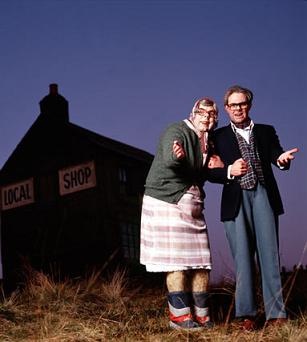
Are you local…?
One of the first articles I ever wrote as a journalist chronicling the dizzy heights of local government politics was one on localism. Indeed, there was a period in the noughties when ‘localism’ was to jargon bingo what Kazakhstan is to Scrabble, and there was very little else worth writing about.
Tony Blair’s smack in the face to the electorate over its opposition to the war in Iraq brought to an abrupt end the faith many had in national politics and many who were driven by a desire to use politics to change the world for the better banked on a more localist approach as being their only real opportunity to get things done. The new technocratic managerialism of the Westminster village was of no interest to those who thought getting your hands dirty meant creating community orchards and staffing food banks. The new politics is, after all, one where twitter has more clout than Hansard and where Queen’s Speeches seem increasingly irrelevant to the lives of most people.
So localism, Blighty’s ‘make good and mend’ version of Europe’s love affair with subsidiarity, ended up being a political concept that activists of all persuasions could get behind and champion. Community budgets, parish councils, free schools – localism gave birth to them all. But as Michael Gove has shown during his tenure at the Department of Education, localism is a better companion in Opposition that she is when the temptation to meddle from the centre takes route in power.
In her most recent blog for shiftinggrounds.org, Molly Conisbee embraces the localist proposition, arguing that to have any hope of walking head high into Downing Street the ‘the left’ must ‘go local’. Her warning to the political class is pointed: “Local change is perhaps the only thing that will transform where the real apathy lies – at the top.”
The tactic is a simple one – as both Lord Rennard’s Lib Dems and UKIP know too well. Only by galvanizing the power of the protest vote can John Cruddas get Ed Miliband across the Dispatch Box after next year’s General Election.
“Nigel Farage has succeeded in both senses of local – both at community level and down the pub,” Conisbee argues. “UKIP’s success is at least in part based on ideology as specific place; its selling-point is that they are listening to genuinely local concerns, while a political elite tunes its ear elsewhere.”
Drawing contemporary parallels with the municipal socialism of Joseph Chamberlain, she writes: “Back to the community does not need to be a backward-looking, insular activity. Our locales have changed beyond all recognition since Chamberlain’s day. But taking the best elements of his ‘unauthorised programme’ could provide a fascinating blueprint for local re-engagement. If part of the present alienation with politics is the gaping distance between rulers and ruled, then the only way to overcome the gulf is to bridge it or destroy it.”
Having never been one to believe that postcode power had to be a lottery, I think she might just have the solution. Are you local? The left will have to be if it has any hope of surviving.
Molly Conisbee’s ‘The Left Must Go Local to Survive’ and other blogs can be read at http://shiftinggrounds.org/2014/06/the-left-must-go-local-to-survive/
 jceriedwards